
Lake Texoma Fishing Guides in Pottsboro, TX | Buckley Striper Guide Service
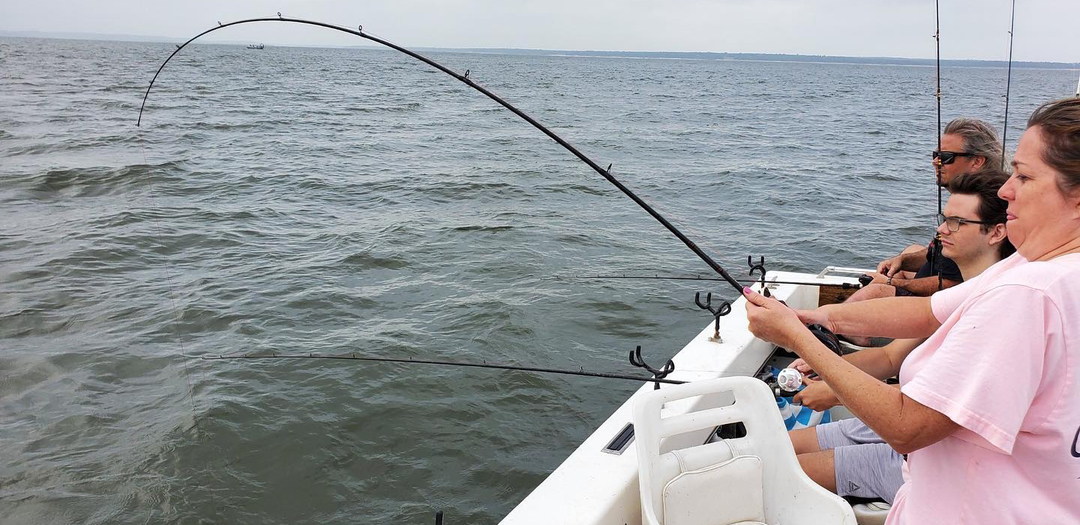
Buckley Striper Guide Service provides professional Lake Texoma fishing guides in Pottsboro, Texas, specializing in striped bass trips using live bait and artificial lures. Led by Steve Buckley, our guided fishing trips are designed for beginners, families, and experienced anglers who want a safe, productive, and hands-on day on Lake Texoma. Every trip is customized based on season, conditions, and your goals to give you the best possible fishing experience.
Short Answer
Lake Texoma fishing guides offer professionally guided trips that help anglers locate, catch, and land striped bass efficiently on Lake Texoma. Buckley Striper Guide Service operates out of Pottsboro, Texas and provides guided fishing trips using proven seasonal techniques, quality equipment, and hands-on instruction for anglers of all experience levels.

Lake Texoma fishing guides help anglers catch fish efficiently and safely.
Lake Texoma fishing guides exist to remove uncertainty from your trip and replace it with experience, preparation, and local knowledge. Instead of guessing where fish might be, guided anglers rely on daily time on the water, electronics, seasonal patterns, and proven techniques.
Buckley Striper Guide Service focuses on striped bass and designs each trip around current lake conditions, angler experience levels, and realistic expectations for the day.

Choosing a Lake Texoma fishing guide matters because conditions change daily.
Lake Texoma is a large, dynamic reservoir where wind, bait movement, and water temperature can shift fish behavior quickly. A professional guide adapts to those changes in real time—adjusting locations, depth, and technique throughout the trip.
Captain Steve Buckley fishes Lake Texoma more than 250 days per year, allowing him to make informed decisions that give clients the best opportunity to catch fish.

Buckley Striper Guide Service offers hands-on, personalized guided fishing trips.
When you book with Buckley Striper Guide Service, you fish directly with Steve Buckley. This one-guide approach ensures clear communication, consistent instruction, and a relaxed atmosphere on the boat.
Trips are customized for:
-
First-time Lake Texoma anglers
-
Families and small groups
-
Anglers wanting to learn techniques they can repeat on their own
For larger groups, additional boats can be coordinated so everyone can enjoy the experience.
Anglers who want to learn the lake quickly often hire a professional Lake Texoma fishing guide who understands seasonal patterns, bait movement, and the best fishing areas.
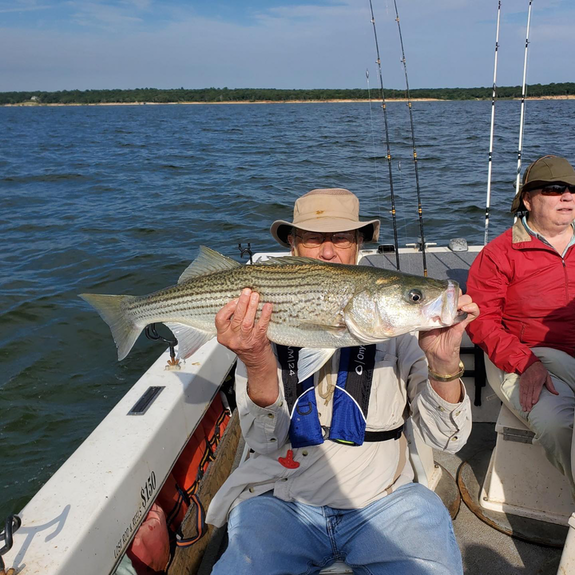
Lake Texoma fishing guides use live bait and artificial lures depending on conditions
Successful Lake Texoma fishing guides choose techniques based on what the fish are doing that day. Live bait is often used when fish are feeding deeper or when steady action is the priority. Artificial lures are ideal when fish are active and anglers want a more hands-on experience.
Buckley Striper Guide Service regularly uses:
-
Live bait drifting and anchoring techniques
-
Slab spoons for vertical jigging
-
Swimbaits when fish are suspended or feeding aggressively
Clients are coached step-by-step so they understand not just what to do, but why it works.
Professional licensing and insurance protect guided fishing clients
Not all Lake Texoma fishing guides operate at the same professional standard. Buckley Striper Guide Service is fully Coast Guard licensed and properly insured, providing peace of mind for clients and families.
Boats, equipment, and safety gear are maintained and cleaned regularly, and trips are conducted with clear safety communication from start to finish.
Lake Texoma produces striped bass year-round with seasonal patterns
Our number one asked question is, “What is the best time of year for striper fishing Lake Texoma?” Any time you get a chance to Striper Fish Lake Texoma, do so! Here are the basic seasons. We catch big Striper 365 days of the year, come join us.
Lake Texoma is one of the most consistent striped bass fisheries in the country. While fish can be caught any time of year, tactics and locations change by season.
General seasons include:
-
Winter: Mid-November to Mid-March
-
Spring: Mid-March to Mid-May
-
Summer: Mid-May to Mid-September
-
Fall: Mid-September to Mid-November
A professional guide helps anglers understand what to expect during their visit.
Follow Lake Texoma Striper Fishing Seasons for more information.
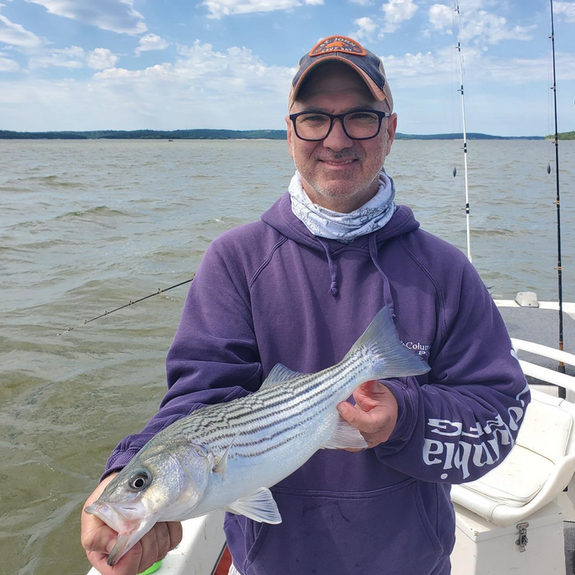
Striper Fishing Capital of the World-Lake Texoma
Surcharge Pool (Elevation in Feet)
Flood Control Pool (Elevation in Feet)
Conservation Pool (Elevation in Feet)
Inactive Pool (Elevation in Feet)
All storages based on a contributing drainage area of 33783.0 square miles or 1801760 ac-ft.
Longitude: -96° 34′ 20″ Latitude: 33° 49′ 5″
Meet Lake Texoma
Lake Texoma is a special Striper Fishery and we are always excited to show anglers this reservoir. Come experience this 1944 classic impoundment with the best Lake Texoma striper fishing guide, Steve Buckley, and associates
Lake Texoma is one of the largest reservoirs in the United States, the 12th largest US Army Corps of Engineers’ lake, and the largest in the Tulsa District. Lake Texoma is formed by Denison Dam on the Red River in Bryan County, Oklahoma, and Grayson County, Texas, about 726 miles upstream from the mouth of the river. It is located at the confluence of the Red and Washita Rivers. The project was completed in 1944.
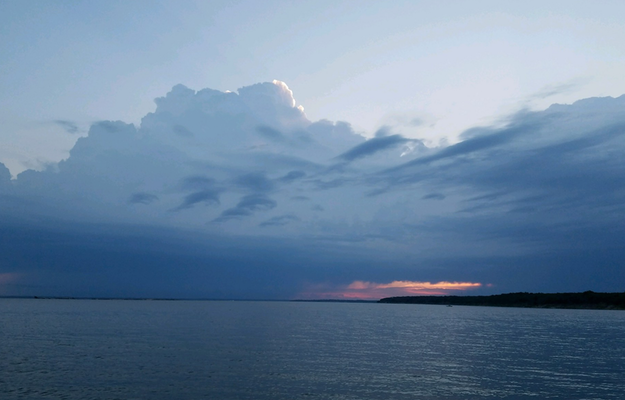
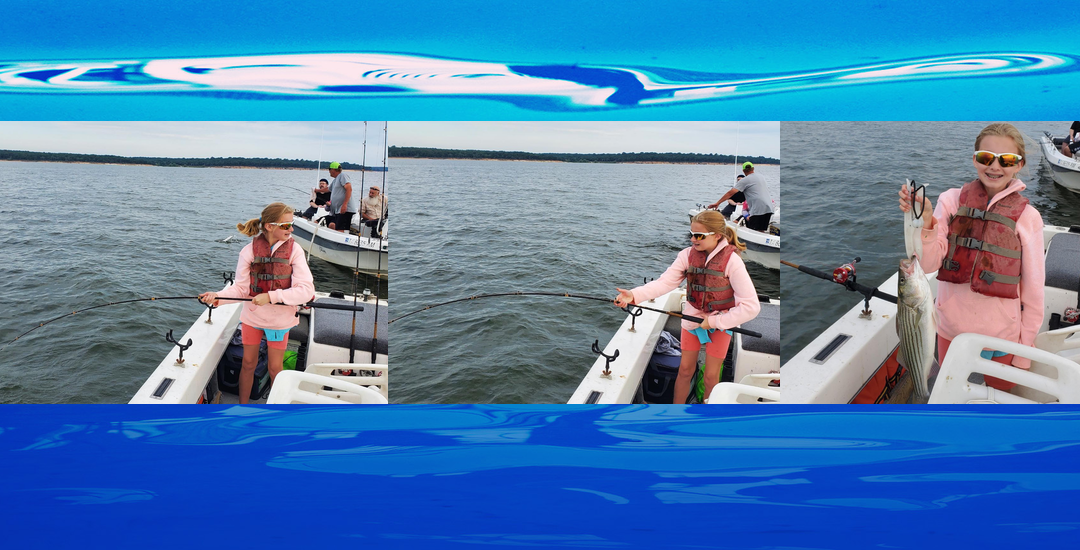
Striper Fishing Lake Texoma-Easy as 123
Great Lake Texoma Fishing Guides make catching Striper look easy, and Steve Buckley does just that! Artificial lures or live-bait, Buckley Striper Guide Service puts fish in the net.
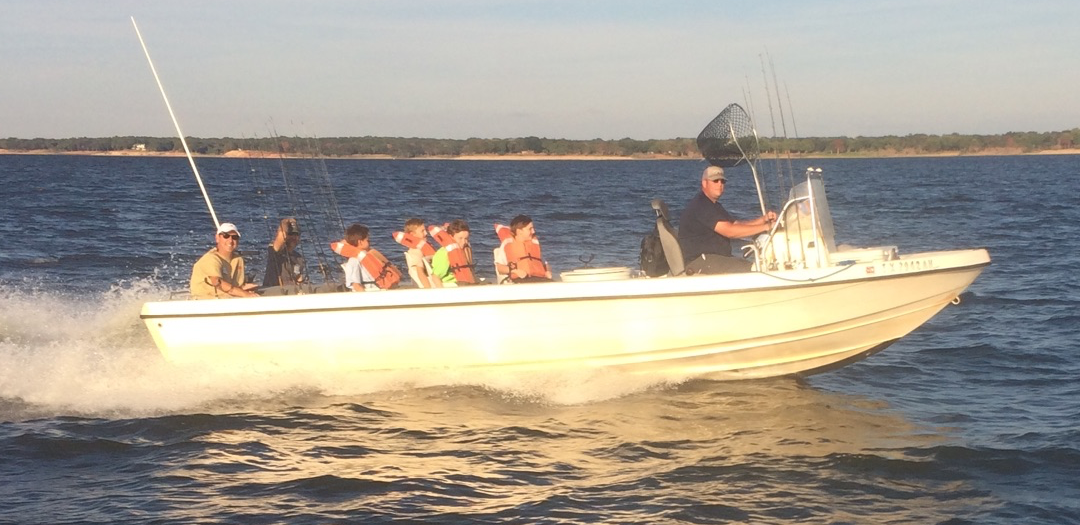
Custom Built Lake Texoma Striper Boat
All Lake Texoma Fishing Guides want to keep clients safe and dry. I provide a custom 24 foot Falcon center console boat to make sure my clients are comfortable, dry, and safe. I designed the floor plan to make sure clients have legroom and their own comfortable, clean seat. Dry storage is available under each seat and we can fish 6 adults and two kids with ease.
We Book Corporate Groups
If you have a larger group, no worries, we can charter more boats. I have room for your coolers and gear too. Lake Texoma can get very rough with gusty winds so the 24 foot Falcon powered by an inboard 350 Mercury will keep everyone safe and dry.
Gear Provided
Buckey Striper Guide Service provides all the rods, reels, live bait, lures, lifejackets, and everything you will need to have a successful trip. The boat is equipped with the latest fishing finders, graphs, and trolling motors to keep clients catching Striper.
Wondering What a Lake Texoma Fishing Guide Costs?
Lake Texoma striper guide prices vary by group size, season, and boat quality. We break down average rates, what’s included, and how to get the best value.
Satisfied Customers

“Steve was awesome and would highly recommend him to anyone looking to fish on Lake Texoma! We are already planning for another trip!”
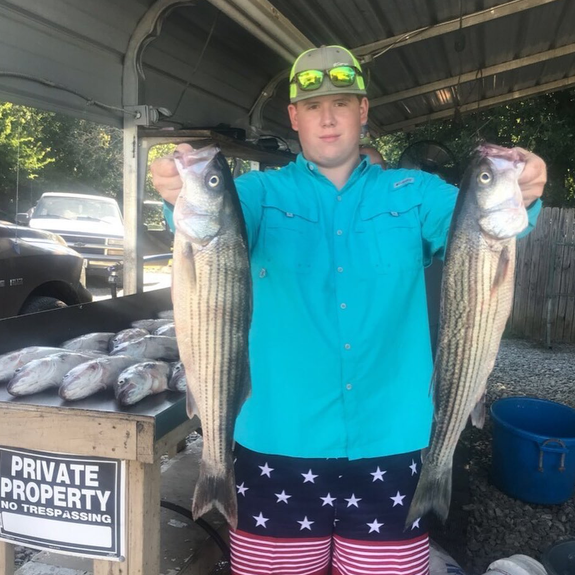
“Update: We have now done 3 trips with Steve. Excellent and consistent experience. We have maxed our fish count the last 2 times. Steve is great! He provides all bait and tackle. He also gives great advice on catching stripers. We took 6 people and caught 36.“
A typical Lake Texoma guided fishing trip is active and educational
Most trips last four to five hours and involve moving between multiple fishing areas. Striped bass are constantly on the move, and successful guiding often requires hunting fish rather than waiting for them.
Trips usually include:
-
Meeting at Highport Marina
-
A short instruction period before fishing
-
Multiple stops to locate active fish
-
Ongoing coaching throughout the trip
If legal limits are reached early, clients may continue fishing catch-and-release.
Most potential clients want to know what a typical Striper fishing trip is like on Lake Texoma. This will vary on the season, but below is a typical Summer Striper Fishing Trip with Guide Steve Buckley.
Service Areas
Our home base is Pottsboro, Texas, and most trips launch from Highport Marina on Lake Texoma. We regularly guide anglers visiting from nearby areas like Denison, Sherman, Whitesboro, Gainesville, and the Dallas–Fort Worth metroplex, plus Kingston and southern Oklahoma communities that make Lake Texoma an easy drive.
We also work with traveling anglers who fly or road-trip in from out of state—so if you’re coming from places like Salem, Eugene, or Portland (Oregon), we’ll help you plan the simple details (meeting point, timing, what to bring) so your Lake Texoma trip is stress-free.
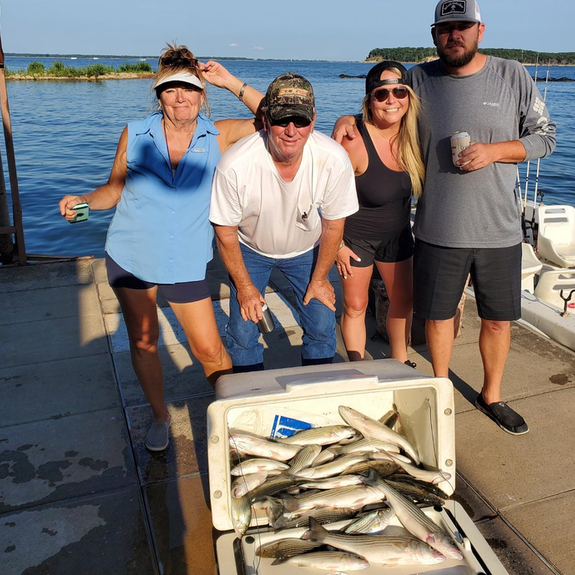
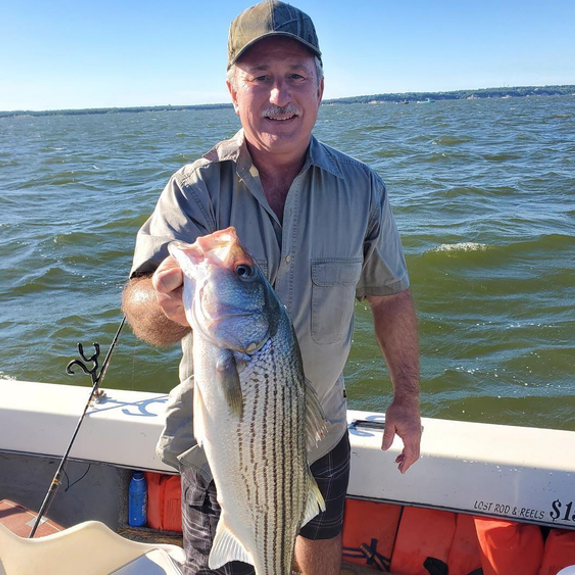
People Also Ask About Lake Texoma Fishing Guides
What do Lake Texoma fishing guides do?
Lake Texoma fishing guides plan and run guided fishing trips, provide boats and equipment, and help anglers locate and catch fish efficiently based on daily lake conditions.
Are Lake Texoma fishing guides worth it?
Yes. Guides shorten the learning curve, improve safety, and significantly increase the chances of catching fish—especially for visitors and first-time anglers.
How long are guided fishing trips on Lake Texoma?
Most guided fishing trips on Lake Texoma last four to five hours, depending on conditions and client preferences.
Do Lake Texoma fishing guides provide equipment?
Most professional guides, including Buckley Striper Guide Service, provide rods, reels, bait, lures, and safety equipment.
Where do Lake Texoma guided trips usually start?
Many guided trips launch from Highport Marina, with exact meeting details confirmed before the trip.

Top FAQ
Do I need a special fishing license for Lake Texoma?ma?
Yes. All anglers age 17 and older must have a Lake Texoma Fishing License. Regular Texas or Oklahoma fishing licenses do not apply on Lake Texoma.
What should I bring on a guided fishing trip?
Bring weather-appropriate clothing, sunglasses, sun protection, snacks, drinks, and two coolers—one for the boat and one for your fish at the end of the trip.
What does Buckley Striper Guide Service provide?
We provide the boat, fuel, rods, reels, bait, lures, terminal tackle, and lifejackets for your guided fishing trip.
Is this a private guided fishing trip?
Trips are typically private for your group. Larger groups can be accommodated with additional boats when arranged in advance.
Will my fish be cleaned after the trip?
Yes. Legal fish are cleaned, filleted, and packed so they are ready to take home.
For information please follow More FAQ.
Book Your Lake Texoma Fishing Guide Today
Ready to book your Lake Texoma striper trip with Captain Steve Buckley? Call or text (972) 345-8516 and tell us your preferred dates, group size, and whether you want live bait, lures, or a mix. We’ll recommend the best plan for your group and get you set up for a fun, safe day on Lake Texoma.
Reach Us
Contact Steve Buckley, Lake Texoma Striper Fishing Guide.
71 Pine Dr.
Pottsboro TX 75076
(972) 345-8516
SteveCBuckley@earthlink.net